~5 kWh and up
Homes
A smaller starting point.
Home storage can start at around 5 kWh, subject to the product range, with larger or modular options to suit your usage, tariff and future plans.
Try a home example →
Battery storage for homes & businesses
From home systems around 5 kWh to commercial cabinets and container-scale storage. Explore batteries on their own or alongside solar, with expansion and backup options designed into the specification.
Choose capacity for a reason
The right battery starts with the energy you want to shift, the power you need at one time and the available supply. More capacity is useful only if your site can charge it and use it effectively.
~5 kWh and up
Homes
Home storage can start at around 5 kWh, subject to the product range, with larger or modular options to suit your usage, tariff and future plans.
Try a home example →kWh to larger systems
Commercial buildings
Modular stacks and cabinet systems for commercial sites, assessed against operating hours, demand data, charging capacity and the role storage will play.
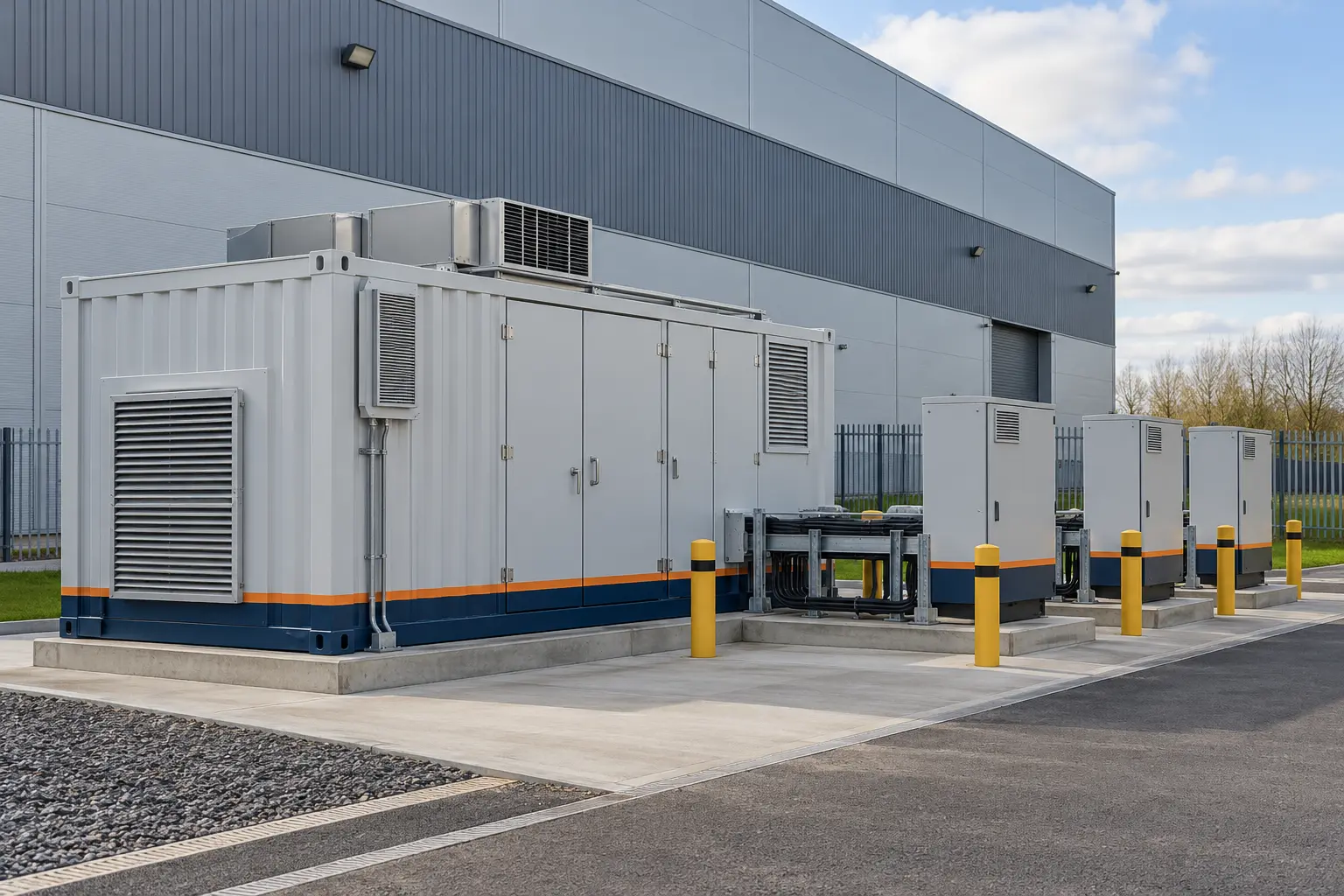
Try a commercial example →MWh scale projects
Large commercial & industrial
Larger containerised battery projects need a site-specific engineering assessment covering supply, layout, access, fire strategy, connection requirements and operating controls.
Explore a large-system example →UK day / night tariff calculator
Enter your actual day and night rates in pence per kWh. We estimate the value of shifting electricity through a battery, allowing for losses and limits—not simply multiplying the tariff difference by battery size.
Illustrative home example. Rates are editable examples, not live UK tariff offers.
Daily energy delivered is the lowest of usable capacity after your extra backup reserve, charging power × cheap hours × round-trip efficiency, discharge power × the day-use window, and the day-rate demand you entered. Capacity is treated as usable discharge energy for this initial estimate; actual AC-deliverable energy should be confirmed.
Grid energy bought overnight = energy delivered ÷ efficiency. Day-rate cost avoided minus overnight charging cost and additional standby cost gives the daily saving. Annual saving = daily saving × equivalent use days, minus the other annual cost change. Negative results are shown rather than hidden.
This simple model cannot establish the right size for a business or home. Actual load timings, simultaneous demand, charging schedules, system settings and tariff terms need a further review. Read independent battery-storage guidance from Energy Saving Trust.
Build in the option to grow
Many battery ranges use modular packs that stack or connect into larger systems. This can let the design grow with your needs, within the manufacturer’s approved configuration.
Different module sizes, maximum stack heights and approved parallel arrangements mean expansion is product-specific. Physical space, age compatibility and warranty conditions need to be considered before promising future additions.
Extra modules may increase the energy stored without increasing the inverter’s charging or discharge power. We assess both how much energy is needed and how quickly the site must use it.
Power-cut protection, specified properly
Suitable battery systems can be installed with a compatible gateway or other approved backup switching arrangement, allowing the system to support agreed loads during a power cut.
Backup is an option to specify, not a feature of every battery installation. The gateway, wiring, supported circuits, available power and reserve all need to be designed together.
Discuss your backup needsBattery-only installations
A suitable battery and inverter can charge from the grid during cheaper periods and supply eligible loads later. Solar panels are not a requirement. If you may add solar later, that needs to be considered when choosing the equipment.
The case depends on your actual tariff spread, system losses, usable demand and installation cost. Moving existing consumption directly into cheap hours can also be worth considering.
From household to procurement team
Our manufacturer and supply-route traceability commitment applies to battery storage too. We agree the equipment specification, warranty information, installation responsibilities and any project-specific ESG evidence requirements.
Read our equipment commitment →Project locations
Explore projects in Cambridgeshire, Lincolnshire, Norfolk, Suffolk, Northamptonshire and Hertfordshire, with enquiries also welcome for Buckinghamshire and Essex. Include your site postcode so the location and project requirements can be reviewed.
Explore areas and project optionsTell us about your site and objectives. We’ll review your enquiry and confirm the proposed installer, scope and delivery arrangements before you commit to a project.
Let’s size it around your needs
Tell us what you want the battery to do: use a night-rate tariff, store solar, support a commercial load or provide backup. Your calculator scenario can carry straight into this enquiry.
Your postcode, electricity usage, day and night rates, any existing solar or battery equipment, and whether power-cut backup is important.
For commercial and container-scale projects, load data, supply capacity and operating hours help establish whether the opportunity is worth developing.
Battery storage, explained
Yes, with equipment and an electrical design suitable for grid charging. Battery-only systems can use eligible cheaper periods and discharge later. The tariff, losses, demand and installed cost need to make sense together.
No. Many ranges have stackable modules or other approved expansion options, but others use fixed-capacity units. Expansion limits, equipment compatibility, age differences and warranty conditions depend on the manufacturer.
A compatible gateway or approved backup arrangement can be specified for suitable systems. We need to agree the loads to support, phases, available power, switching arrangement and reserve. A battery on its own does not guarantee backup.
We consider home systems starting around 5 kWh, larger modular and cabinet systems, and container-scale commercial projects. The product range and final capacity are selected following the site and demand assessment.
No. It is a tariff-shifting energy-bill scenario based on your inputs. It includes the entered efficiency, reserve, charging and demand limits, and any running-cost change you add. It does not include purchase or installation cost, degradation, finance, replacement or future tariff changes, so it is not a project payback calculation.
The calculator limits the energy shifted using your charging power and cheap-rate window. In practice, other overnight loads, equipment settings and the electrical supply may reduce the power available. These need to be reviewed in the design.
No. The example day/night prices are editable assumptions, not a supplier recommendation or live offer. Use the rates, eligible hours and terms available to your own home or business.
Our service areas
Cambridgeshire, Northamptonshire, Lincolnshire, Norfolk, Suffolk, Buckinghamshire, Hertfordshire and Essex.
Discuss your battery project →